


TLDR
- The best law firm marketing strategy is usually not one channel. It is SEO, Google Ads, Local SEO, reviews, and conversion-focused Website Design working together.
- Google Ads can create faster lead generation, but legal clicks are expensive. Attorneys and legal services averaged a $9.87 CPC and $131.63 cost per lead in 2026 WordStream benchmarks.2
- SEO marketing for law firms builds long-term search visibility, topical authority, and trust across practice areas.
- Small Law Firms should niche down, track calls and forms in Google Analytics, and protect every dollar in their marketing budgets.
- Your best next step is developing a Law Firm marketing plan that connects marketing goals to signed matters, not just traffic.
Someone searching “car accident lawyer near me” is not casually browsing. They are stressed, injured, unsure what to do next, and probably comparing several law firms within minutes.That is why law firm marketing is different from marketing a cafe, gym, or software product. Legal marketing has to build trust fast. It also has to respect advertising rules, avoid misleading claims, and make the path to a consultation painfully clear.
Lawyer advertising is generally permitted under ABA Model Rules 7.1 and 7.2 when it is not false or misleading, while paid referrals and solicitation rules still matter.1 Translation: your marketing efforts can be ambitious, but they cannot be sloppy.So, which marketing strategy is best for your law firm? The honest answer: the best strategy depends on your timeline, practice areas, market, and gross revenue. The practical answer: most law firms need a blended digital marketing plan built around search engines, trust signals, and strong intake.
Start With the Legal Client Journey
A strong marketing plan starts with how clients actually choose legal services.
A personal injury attorney, family lawyer, estate lawyer, and business lawyer may all use Google Ads, social media, and content marketing. But their buyers are in completely different emotional states. A personal injury lead may want free consultations right now. An estate planning client may read three blog posts before booking. A business owner may ask professional networks for referrals, then check your Google Business Profile, attorney biographies, Client Reviews, and Legal Directories before calling. That is the Engagement Gap. Law firms often invest in visibility, but forget the middle step: helping the visitor feel understood enough to act.
Your brand identity should answer three questions quickly:
- Who do you help?
- What legal problem do you solve?
- Why should this client trust you over the next firm in the search results?
If those answers are buried under generic copy, even great PPC ads can leak money.
Need a starting point? Review your top practice area page and ask whether a nervous client would know what to do in ten seconds.
SEO vs. Google Ads for Law Firms
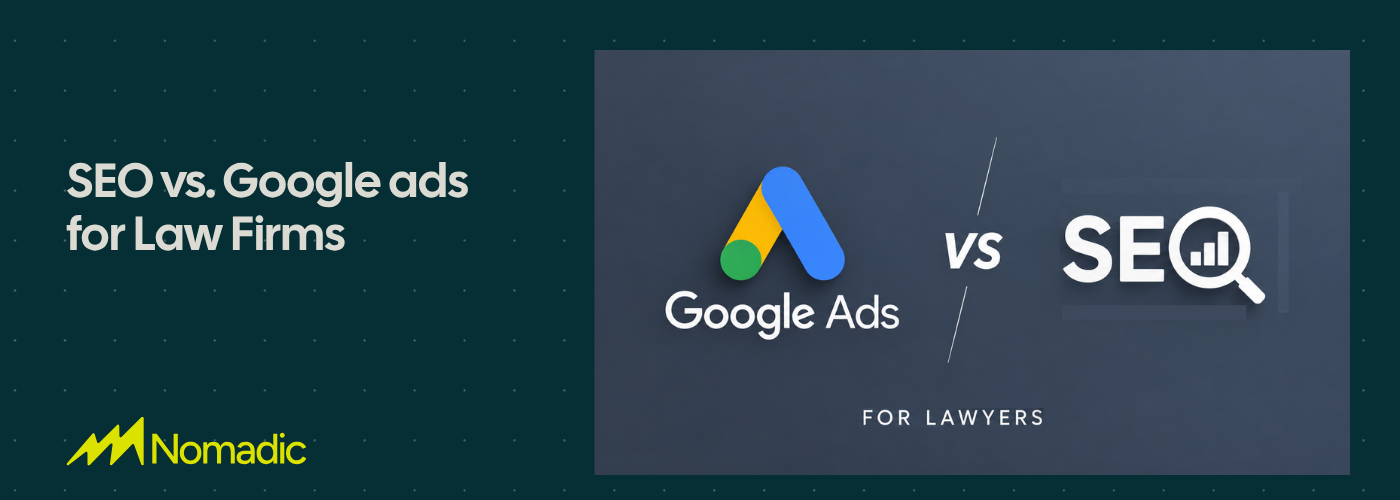
SEO vs. Google Ads for law firms is really a question of timing.
Google Ads is best when your firm needs leads soon, has a defined practice area, and can afford testing. SEO is best when your firm wants durable online presence, lower long-term dependence on paid search, and stronger brand awareness in search engines.
In 2026, WordStream analyzed more than 13,000 search advertising campaigns across 23 industries, and attorneys and legal services had some of the highest paid search costs in the benchmark set.2 For law firms, that means PPC Marketing can work, but casual spending gets expensive quickly.
Think of paid search like renting the best office on the busiest street. The moment you stop paying, the lights go off.
SEO is more like owning a strong local reputation. It takes longer to build, but service pages, content silos, case studies, client testimonials, local SEO, and Google reviews can keep attracting clients after the first campaign push.
Our recommendation: do not treat SEO and Google Ads as enemies. Use Google Ads to learn which local keywords and landing pages convert. Then use those insights to strengthen law firm SEO, content marketing, and Local SEO.
Google Ads for Law Firms
Google Ads for law firms works best when the campaign is tightly built around intent.
“Lawyer” is too broad. “Car accident lawyer free consultation in Miami” is closer to money. The more specific the search, the more your Landing Pages, ad copy, intake process, and offer need to match.
For example, if someone clicks an ad for a car accident attorney, do not send them to a homepage listing every legal service. Send them to a page about car accident claims, common client scenarios, what documents to gather, what the consultation includes, and how your firm handles communication.
Google Local Services Ads can also matter for legal services. Local Services Ads help local service providers appear in Search and pay when potential clients get in touch, and eligible legal categories include bankruptcy, business, contract, criminal, disability, DUI, estate, family, immigration, and IP lawyers.3
Pro Tip: Paid search should never run without tracking. Google Analytics can measure how users reach , start andd submit forms, as well as move through the lead generation process.4 For law firms, pair that with call tracking, intake notes, and signed-case reporting. Clicks are not clients. Leads are not signed matters. Keep following the trail.

SEO Marketing for Law Firms
SEO marketing for law firms is the long game, but it is not a waiting game.
The right search engine optimization plan builds pages around practice areas, local keywords, client concerns, and evidence of experience. That includes service pages, attorney biographies, FAQs, blogs, internal links, directory listings, and Google Business Profile optimization.
Google says local results are based mainly on relevance, distance, and prominence, and that complete business information, reviews, and positive ratings can help local visibility.5 For law firm SEO, that means your profile, website, and reviews should all tell the same story.
Content Marketing for Law Firms should also move beyond generic “What to do after an accident” posts. Build topical authority through a content silo. A personal injury firm might create connected pages for car accidents, truck accidents, pedestrian accidents, insurance adjusters, settlement timelines, medical documentation, and mistakes after a crash.
AI search makes this even more important. Google’s guidance for generative AI features recommends unique, helpful, expert-led content and says foundational SEO best practices still apply.6 In plain English: do not chase AI search tricks. Publish content only your lawyers could credibly explain.

Where Social Media For Lawyers Comes In
Social Media for Lawyers is not usually the first place a high-intent client searches, but it is useful for brand building, community involvement, referral relationships, and staying visible.
Social media marketing works best when your posts answer real client fears. A family lawyer might explain what to bring to a first consultation. A personal injury attorney might explain why posting on social media after an accident can create problems. A business lawyer might share contract mistakes that small firms see repeatedly.
Use social media platforms for credibility, not legal theatre. Paid social can support retargeting, brand awareness, video marketing, and local campaigns, but it should not replace search.
This is also where traditional media, referral networks, word of mouth, and networking for Lawyers still matter. Referrals remain the top lead source for solo and small law firms, with 59% naming referrals as their top source of leads.7 Digital marketing should strengthen those referral relationships, not pretend they no longer exist.

Building the Right Marketing Mix
A complete guide to Law Firm marketing would be longer than one blog, but your core marketing tactics should fit into four buckets:
- Capture active demand with Google Ads, local service ads, law firm SEO, and Local SEO.
- Build trust with a strong and responsive website design, attorney biographies, client testimonials, Google reviews, case studies, and legal directories.
- Create demand with video marketing, social media, Paid Social, community involvement, and professional networks.
- Measure and improve through Google Analytics, call tracking, intake quality, signed cases, and growth and retention reporting.
Pro Tip: Small Law Firms should not copy national firms with national budgets. Niche down. Pick the practice areas that produce the best cases, write for those clients, and build campaigns around the exact cities and scenarios you want.
If your firm is trying to choose between SEO, Google Ads, and social media,
Build a Law Firm Marketing Strategy That Actually Connects
You can handle pieces of this yourself, especially reviews, referrals, and basic content. The hard part is coordinating SEO, Google Ads, PPC ads, Landing Pages, social media, Website Design, and tracking into one system. The real win is making those channels work from the same case strategy. Nomadic helps law firms turn scattered marketing efforts into a focused plan for better visibility, stronger leads, and a clearer path from search to consultation. Book a consultation to get started!
Key Takeaways
- The best marketing strategy for a law firm usually combines SEO, Google Ads, Local SEO, reviews, and strong intake.
- Google Ads can move faster, but legal paid search requires careful budget control and conversion tracking.
- SEO builds topical authority, search visibility, and trust across your main practice areas.
- Social media supports brand awareness and referral relationships, but search usually captures higher intent.
- Your marketing plan should measure signed cases, not just clicks, impressions, or form fills.
Frequently Asked Questions
Is SEO or Google Ads better for law firms?
SEO is better for long-term visibility, while Google Ads is better for faster lead generation. Most law firms should use both once their website, intake process, and tracking are ready. Google Ads can identify profitable local keywords quickly, while SEO turns those insights into content, service pages, and organic search results that can keep working over time.
How much should a law firm spend on marketing?
A law firm should base marketing budgets on growth goals, practice area value, competition, and gross revenue. There is no responsible one-size number. A firm pursuing personal injury cases in a competitive city may need a larger paid search budget than a small estate planning firm relying on referrals, Local SEO, and educational content.
Do Google reviews matter for law firm marketing?
Google reviews matter because they influence trust and can support local visibility. Local prominence can include review count and positive ratings, and client reviews also help potential clients compare firms before contacting one.5. Ask ethically, avoid pressure, and never reveal confidential client information when responding.
What should be included in a law firm marketing plan?
A law firm marketing plan should include target practice areas, ideal client scenarios, marketing goals, channel strategy, content plan, advertising budget, tracking setup, and intake follow-up. It should also define who reviews leads, how quickly calls are returned, and which campaigns produce signed clients, not just inquiries.
Is social media useful for lawyers?
Social media is useful for lawyers when it supports trust, education, and community visibility. It is usually not the only client acquisition channel, but it can help with brand awareness, referrals, video marketing, and retargeting. Keep posts practical, compliant, and focused on client questions rather than legal jargon.
References
- American Bar Association. (2025). FAQs on attorney advertising and ethics rules in the digital age.
- WordStream. (2026). Google Ads benchmarks 2026: Competitive data and insights for every industry.
- Google. (n.d.). Reach local customers with Local Services Ads.
- Google. (n.d.). How to generate more leads on your website. Google Analytics Help.
- Google. (n.d.). How to improve your local ranking on Google.
- Google Search Central. (2026). Google’s guide to optimizing for generative AI features on Google Search.
- Clio. (2025). Clio releases 2025 Legal Trends for Solo and Small Law Firms Report.